Stories · Environmental Education · Hercules · May 2025
Integrating New Science Standards into Garden Education
At Lupine Hills Elementary, garden lessons plug directly into the district's science curriculum, and the front of the school became a living laboratory.
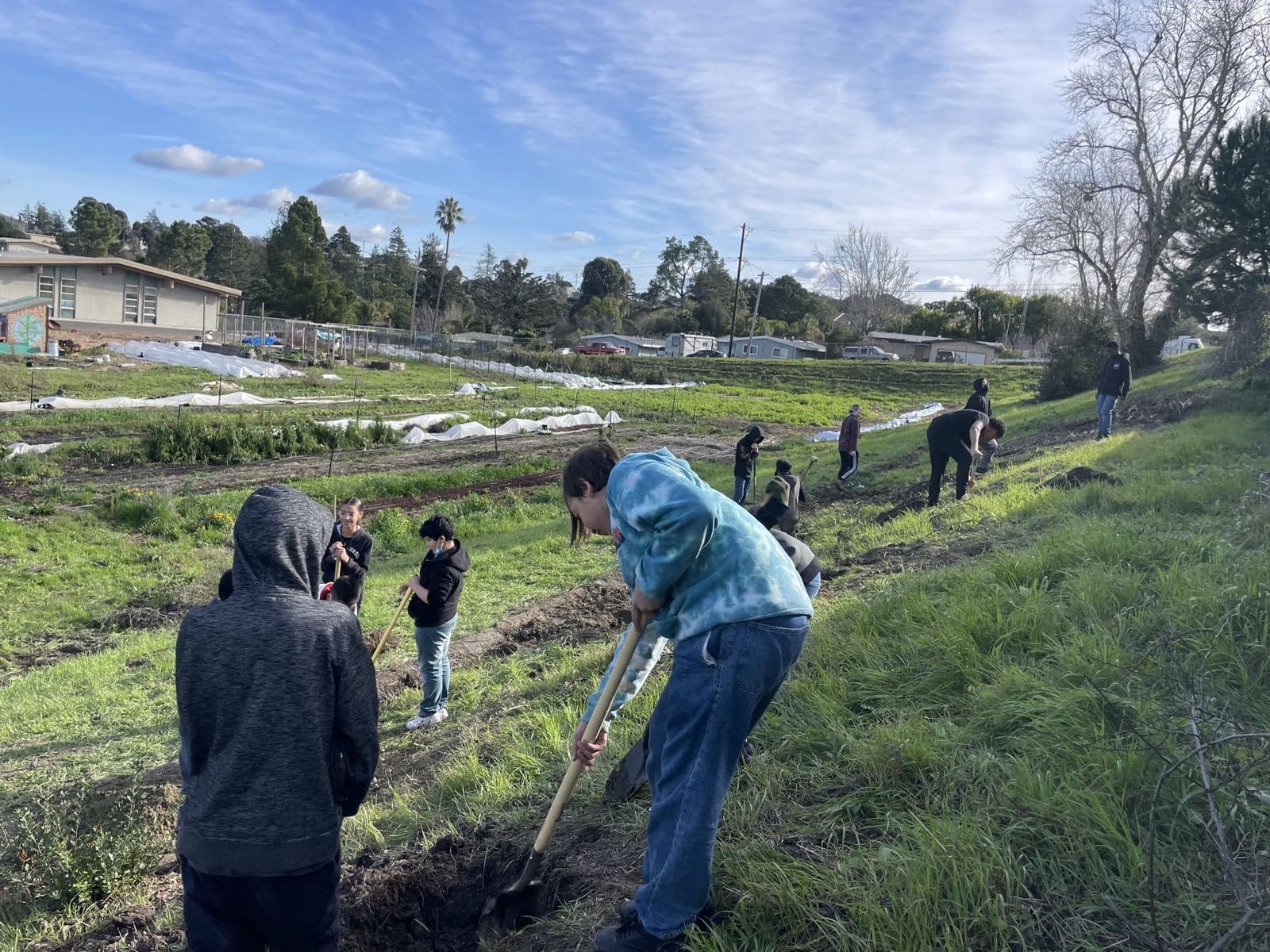 Students plant natives on the Lupine Hills hillside
California's Next Generation Science Standards (NGSS) emphasize hands-on, inquiry-based learning that aligns naturally with garden-based education. When students study plant life cycles through direct observation and care of garden plants, they engage with NGSS standards like MS-LS1-4 (constructing scientific explanations for how environmental factors affect plant growth) in a tangible way. This alignment creates an opportunity to support K-5 teachers in meeting NGSS requirements while engaging diverse learning styles through experiential education.
Growing Together responded to a need for supporting science instruction by integrating outdoor experiential learning with WCCUSD's adopted TWIG science curriculum. At Lupine Hills Elementary, Program Director Elizabeth Merritt collaborates with teachers across all grades (TK-5) to deliver coordinated science instruction. Students receive bi-monthly garden lessons, 40 minutes for younger grades and one hour for older grades, that directly complement their classroom curriculum.
A living laboratory out front
The impact extends beyond standard curriculum integration. Upper-grade students are leading a native plant restoration project in front of the school, combining scientific observation with community engagement. Students track their assigned plants throughout the growth cycle and write interpretive essays that will be accessible to visitors through QR-coded plant labels created in partnership with the school's Fab Lab. This project transforms the school grounds into a living laboratory while creating lasting educational resources for the broader community.
Adapted from our 2024 Annual Report.